


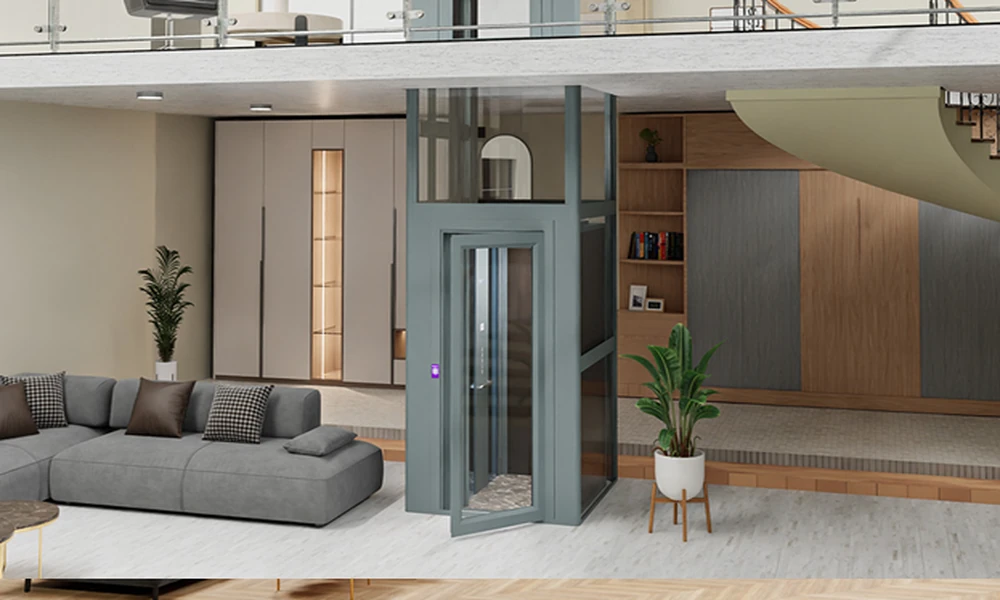
Hydraulic home lifts remain one of the most trusted categories of residential vertical transport, valued for their smooth ride quality and proven mechanical reliability. Understanding exactly how hydraulic lifts work, and what genuine advantages they offer over other drive systems, helps homeowners make a more informed comparison when choosing between options.
How Do Hydraulic Home Lifts Work?
A hydraulic system uses fluid pressure within a sealed, closed-loop mechanism to raise and lower the cabin. A pump generates pressure that moves the piston or chain-driven mechanism, producing smooth, controlled movement in both directions. This mechanism has been refined over decades, which is part of why hydraulic systems continue to be a widely trusted choice for residential installations.
Key Features of Hydraulic Home Lifts
Smooth, quiet operation: The fluid-based mechanism naturally produces gentle acceleration and deceleration, without the abrupt movement sometimes associated with purely mechanical systems.
Reliable zero-power descent: Many hydraulic systems can lower safely to the nearest floor during a power failure, using stored pressure rather than requiring continuous electrical input.
Moderate installation requirements: Compared to older lift categories, current hydraulic models often need only a shallow pit, with some requiring none at all when installed with a threshold ramp.
Consistent load handling: Hydraulic systems are well suited to handling consistent daily loads without significant wear, given the mechanism’s mechanical simplicity relative to more complex drive systems.
Long service life: With proper maintenance, hydraulic mechanisms are known for lasting well over a decade of regular use.
What Are the Main Benefits of Choosing a Hydraulic Lift?
Proven reliability: Hydraulic technology has been used in both commercial and residential settings for many years, giving it a strong track record.
Lower mechanical complexity: Fewer moving parts compared to some gearless systems can translate into more straightforward servicing over the lift’s lifetime.
Comfortable ride experience: The natural smoothness of fluid-based movement tends to feel especially gentle, which matters particularly for elderly users or anyone sensitive to sudden motion.
Flexible installation options: Many hydraulic models can be installed indoors or outdoors, offering flexibility depending on the property’s layout.
Comparing Hydraulic Lifts to Other Drive Systems
| Factor | Hydraulic Lift | Gearless/Cogbelt Lift |
| Ride quality | Naturally smooth and gentle | Smooth, often slightly faster |
| Mechanical complexity | Lower | Moderate |
| Pit requirement | Often shallow (100-140mm) | Can be pit-free in some models |
| Power failure behaviour | Gravity-assisted safe descent | Battery-backed automatic rescue |
| Best suited for | Reliable, steady daily use | Higher speed, larger cabin needs |
What Makes a Hydraulic Home Lift Genuinely Safe?
A safety hydraulic home lift should include several layered protections working together, rather than relying on a single safety mechanism:
- Automatic rescue functionality, lowering the cabin safely during a power interruption
- Overload sensors, preventing operation beyond the rated weight capacity
- Door interlock systems, ensuring movement only occurs when doors are fully closed
- Emergency communication, allowing help to be summoned directly from the cabin
- Anti-crush and anti-fall mechanisms, protecting passengers throughout the ride
Certification against recognised standards such as EN 81-41 provides independent confirmation that these systems meet established safety benchmarks, rather than relying on manufacturer claims alone.
Elite Elevators’ Hydraulic Models
Elite Elevators offers hydraulic options across different scales. The E200 uses a hydraulic chain drive with a rated speed of 0.15-0.3 m/s, a shallow pit requirement of around 120mm, and patented Greaseless Rail technology that reduces maintenance needs over time. The compact X200 and X200 Plus similarly use hydraulic chain drive systems, rated at up to 0.30 m/s with a 400kg capacity, positioned toward space-conscious households prioritising a straightforward, reliable ride experience over higher speed or a larger footprint.
What Should You Check Before Choosing a Hydraulic Lift?
- Certification: Confirm compliance with EN 81-41 or an equivalent recognised standard.
- Pit and installation requirements: Some models need a shallow pit; others eliminate this with a threshold ramp.
- Maintenance needs: Ask specifically about rail lubrication requirements, since greaseless technology can meaningfully reduce upkeep.
- Power failure behaviour: Confirm how the system responds during an outage and whether this aligns with your safety expectations.
- Noise levels: Request a demonstration if possible, since ride quietness varies between models.
Common Misconceptions About Hydraulic Lifts
“Hydraulic lifts are outdated technology.” The underlying principle is well established, but current engineering has significantly refined efficiency, safety, and installation flexibility.
“All hydraulic lifts need a deep pit.” Many current models require only a shallow pit, and some eliminate the requirement entirely.
“Hydraulic systems are less safe than gearless alternatives.” Safety depends on the specific safety systems and certification in place, not the drive mechanism itself.
Common Mistakes When Choosing a Hydraulic Home Lift
Assuming all hydraulic models share the same pit requirements: These vary meaningfully between manufacturers and specific models.
Overlooking maintenance requirements: Greaseless rail technology can significantly reduce upkeep compared to older lubricated systems.
Not confirming certification directly: Always ask for specific standard compliance rather than assuming general safety claims are equivalent to independent verification.
Choosing purely on speed: Hydraulic systems prioritise smoothness and reliability; buyers wanting maximum speed may want to compare against gearless alternatives directly.
Conclusion
Hydraulic home lifts continue to offer a genuinely reliable, smooth, and well-tested option for residential vertical transport, particularly for households prioritising a gentle ride and proven mechanical simplicity. Understanding the specific safety systems, installation requirements, and maintenance needs of a given model, rather than relying on general assumptions about hydraulic technology, is the best way to choose confidently between the options available.
Frequently Asked Questions
1. How do hydraulic home lifts work?
They use fluid pressure within a sealed system to raise and lower the cabin, producing smooth, controlled movement.
2. Are hydraulic home lifts safe?
Yes, provided they include layered safety systems such as automatic rescue devices, overload sensors, and door interlocks, ideally certified to EN 81-41.
3. Do hydraulic lifts need a pit?
Many models require a shallow pit, though some can be installed without one using a threshold ramp.
4. How long do hydraulic home lifts typically last?
With proper maintenance, hydraulic mechanisms are known for lasting well over a decade of regular residential use.
5. Are hydraulic lifts noisier than gearless models?
Not necessarily; quality hydraulic systems are engineered for quiet operation, though it’s worth requesting a demonstration to compare specific models.
6. What maintenance do hydraulic home lifts need?
Requirements vary by model, though greaseless rail technology in some current systems significantly reduces ongoing lubrication needs