

Two houses can sit fifty feet apart in Boise and need completely different roofs. One was framed in the 1920s with plank decking under three generations of shingles. The other went up with a subdivision a few years ago and is already losing tabs in spring wind. Same sun, same snow, same zip code, yet very different problems waiting overhead.
That is the part generic roofing advice tends to miss. Material choices, permit rules, ventilation fixes and even the right time to replace all shift depending on when a house was built and which part of the city it sits in. Knowing your home’s category tells you more than any shingle brochure will.
It also shapes who you want on the ladder. A contractor who knows these differences will ask about your neighborhood before quoting a single square. When homeowners research residential roofing in Boise, a good example of that approach is Energy Shield Idaho, a licensed, family owned roofer whose owner handles inspections personally and whose crews install architectural shingles, metal roofing and skylights, then sweep the yard with a magnet for stray nails before leaving. Free inspections make it easy to find out which kind of roof you actually have.
The Old Charmers Near Downtown
Homes in the North End, the East End and along Harrison Boulevard carry a lot of history, and so do their roofs. Many started life with cedar shakes nailed to spaced plank boards. When asphalt came along, some owners simply layered over the old roof, and a few layered again.
Boise caps roofs at two layers of covering, so a house already carrying two means a full tear off. That tear off is often a blessing, because it exposes the old plank decking, which usually needs solid sheathing added before modern shingles can be fastened correctly. Chimneys are the other weak point here. Old brick chimneys often have tired step flashing that leaks long before the shingles fail.
Homes inside a historic district or design review overlay also need a review before certain exterior changes are permitted. Switching materials or changing a roofline on one of these houses is worth confirming with the city first, so the project does not stall mid season.
Houses Tucked Against the Foothills
Up toward the foothills, fire and wind matter as much as rain. Boise’s fire prevention code governs roof coverings in hillside and wildland urban interface areas, and the safest choice for these homes is a Class A rated assembly. Most asphalt architectural shingles and metal roofs reach that rating when installed over the correct underlayment.
Beyond the rating, a few details make a real difference against embers.
- Screen attic and soffit vents with fine metal mesh so wind blown embers cannot drift inside.
- Keep gutters clear of dry leaves and pine needles, which act like kindling at the roof edge.
- Close gaps at ridge caps and eave ends where embers can lodge.
- Choose drip edge and flashing in metal rather than anything combustible.
Wind pouring down the slopes also tests fastening. Shingles rated for high wind, installed with the manufacturer’s full nailing pattern, hold up far better than a minimum job.
Midcentury Ranches on the Bench and West Side
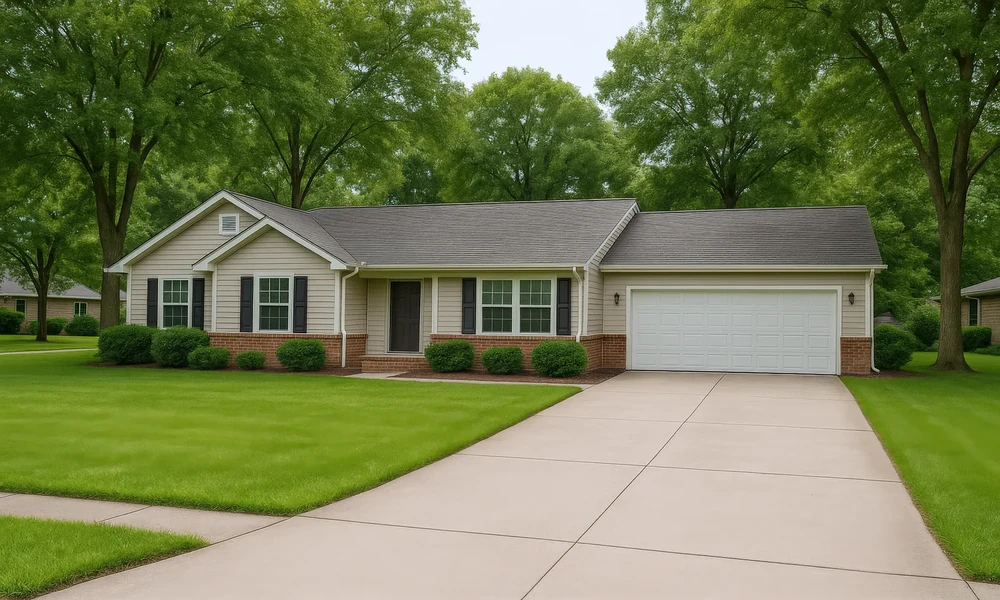
The long, low ranch homes built across the Bench and West Boise from the sixties through the nineties bring their own quirks. Their wide roof planes soak up hours of direct high desert sun, which dries out asphalt and sheds granules faster than on steeper, shaded roofs.
Many of these homes also picked up patio covers, carports or room additions with nearly flat pitches. Asphalt shingles are not allowed below a 2 in 12 slope, and slopes between 2 and 4 in 12 need a double layer of underlayment. Plenty of leaks on these houses trace back to shingles laid on a pitch that was never meant for them. A low slope membrane over the addition, tied carefully into the main roof, usually ends the problem for good.
Newer Subdivision Homes
Southeast Boise, Harris Ranch and the northwest edge of the city are full of homes whose original roofs are starting to show age. Builder grade shingles were often the entry level option, and fifteen to twenty years in this climate is about where they begin to curl, crack and blow loose.
Replacing one of these roofs is a chance to upgrade rather than repeat. Architectural shingles rated for 30 years are the standard, with 40 and 50 year lines available for a modest step up. Impact rated shingles are worth asking about too, since some insurers offer premium discounts for them after hail seasons. It also pays to check that the original ventilation was adequate, because builder roofs sometimes shipped with too few exhaust vents.
When Metal Enters the Conversation
Metal roofing has grown popular across every neighborhood in the city for its long lifespan and its resistance to fire and hail. It does behave differently in winter. Snow slides off metal in sheets, so snow guards above entries, walkways and decks are a smart addition. Noise worries are mostly outdated, since solid decking and underlayment beneath the panels keep rain sounding much like it would on shingles.
Questions That Sort Good Bids From Weak Ones
Whatever kind of house you own, the same handful of questions reveals a lot about the contractor you are talking to.
- Will you pull the city permit, and is your contractor registration current with the state of Idaho?
- Will the old layers come off, and how will you handle any damaged decking you find?
- What ventilation changes, if any, does this roof need?
- Which shingle line are you quoting, and does your installation meet the manufacturer’s warranty requirements?
- How will you protect landscaping and clean up nails once the work is done?
Clear, specific answers usually signal a crew that has worked on homes like yours before. Vague ones suggest the same roof gets sold to every house on the block, whether it fits or not.