


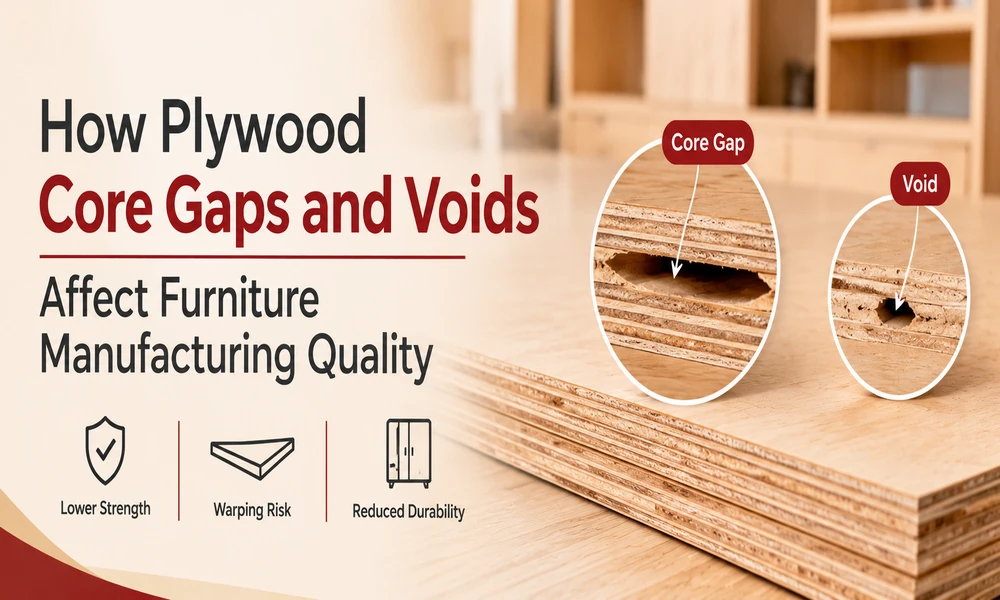
The quality of plywood determines how effectively it can be used in the production of furniture. However, in most cases, the surface of the plywood sheet does not reflect the qualities of its core properly. Gaps and voids between the layers of veneer may cause difficulties during the cutting, drilling, fastening, etc., of the material.
Furniture manufacturers should understand plywood core gaps and voids in order to keep up with the quality of the products and limit the use of raw materials. The overall influence of the gaps and voids on the plywood manufacturing process depends on their size and location as well as the intended use of the plywood. This makes plywood quality in furniture manufacturing an important consideration before production begins.
What Happens Inside a Plywood Sheet?
Plywood is made of several layers of veneer. Proper use of veneer and gluing ensures that plywood is strong enough. But there is a possibility of the unwanted appearance of cavities in the ply because of uneven veneer preparation and an inappropriate gluing process.
Thus, the defects might not be detectable until the plywood is cut or drilled. The surface that appears smooth may hide some internal gaps when the plywood is turned into cabinet sides, bottoms, drawer parts, decorations, etc.
The influence of the internal defect depends on the void location, dimensions of the component, and the ultimate strength of the furniture. Understanding plywood core voids can help manufacturers identify potential defects before production begins.
The Production Problems That Core Voids Can Create
Cutting and CNC Machining
This may lead to uneven edges, localized chipping, or additional preparation before assembling the component.
This issue may be particularly prominent in furniture items that have intricate cuts, thin pieces, or properly machined joints. Manufacturers may need to cut out bad parts of the material, which complicates the process of creation and eats away a lot of material.
Fastening Screws, Fittings, and Hinges
Units of furniture often depend on fixing pieces such as screws, hinges, and connectors. If a fixing location lies exactly at an important internal void, the amount of material for fastening would decrease. This can decrease the quality of the connection based on the fixing piece and how it is done.
But if they plan the place well, the risks can be avoided largely due to the type of fastening used.
Surface Finishing and Assembly
The voids opened while cutting have to be filled with something or made sure that they were processed properly before covering laminates and paint are used. Some nonflat structures may complicate the assembly of furniture.
Such additional work may affect the time of production and increase the number of extra operations needed to be performed.
Why Core Quality Matters for Different Furniture Components
The impacts of voids differ depending on the purpose of furniture. The aim of a decorative surface is mainly to achieve a good result, while for other units it is necessary to withstand the explicit load level needed.
Prior to selecting plywood, manufacturers should take into consideration the following things:
- Load approach: Shelves and structural details need to satisfy their design loads and unmonitored spans.
- Processing difficulty: Computerized machining techniques and complex shapes necessitate careful analysis of materials.
- Fastening places: Hinges, screws, and coupling methods should be properly secured.
- Finishing requirements: Exposed edges require more accuracy with regard to colors and designs.
By selecting high-quality plywood with the right design, manufacturers can secure themselves against problems with the final product.
How Manufacturers Can Detect and Reduce the Risk
In some cases, it is impossible to identify internal cavities by looking at the face of the sheet. That inspection should also include the edges where some defects might be visible,e such as cavities or cracks between the layers of veneer.
Trial cutting and drilling might help uncover problems and defects before starting the mass production process. The manufacturers should also check the thickness of the plywood sheet, fasten it properly during the machining process, and check the crucial details.
Conclusion
Bad-quality details might cause the rejection of parts produced, re-processing, and excessive material waste,te which together result in an increase in the time required for production, regardless of the initial appearance.
By choosing premium plywood sheets in terms of the structural properties and finishing requirements and applying proper technological processes, manufacturers can achieve improved consistency