


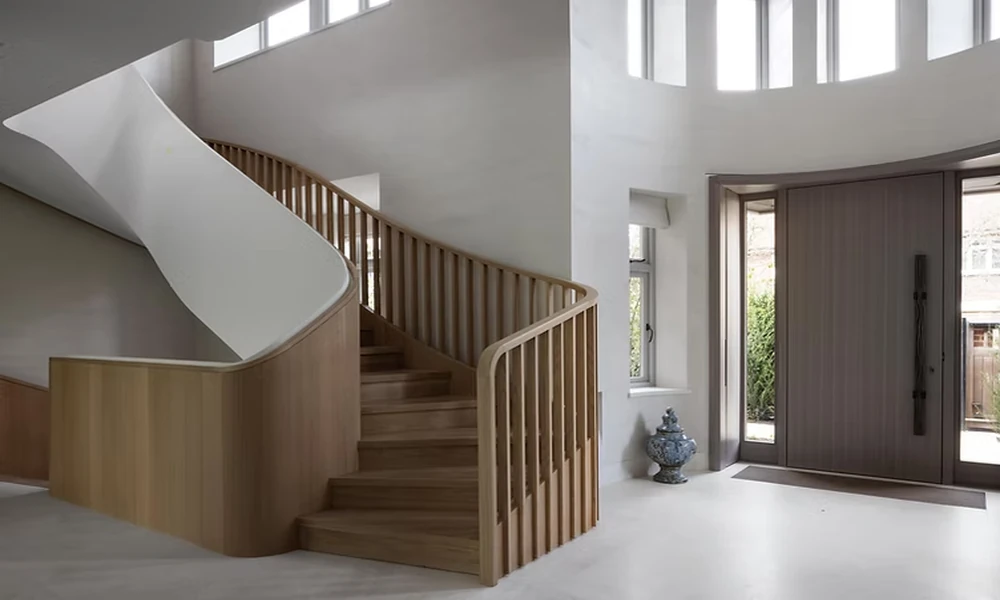
The shape of a staircase decides more about a stair lift than almost any other factor, including price, installation time and how it looks in the home. A stair lift on a straight flight is usually a standard product that can be fitted quickly, while a staircase with turns, landings or a spiral needs a rail made to measure. Understanding the difference between straight and curved options helps families plan realistically and compare quotes fairly, rather than being surprised by lead times and costs after a survey.
How a Stair Lift Works
A stair lift carries a seated passenger along a rail fixed to the staircase. The rail is usually mounted on the stair treads rather than the wall, which means most staircases can take one without structural changes. A motor drives the carriage along the rail, and modern units typically run on rechargeable batteries that charge at each end of the track. The seat swivels at the top so the user can step off safely onto the landing, away from the stairs.
Straight Stair Lifts
Straight lifts are designed for staircases that run in a single, continuous line with no turns or intermediate landings. Because the rail is a straight section cut to length, many units are available from stock and can be installed within days. Installation is usually quick, often completed in a few hours. Straight lifts are generally the most affordable option and are easier to relocate or resell if circumstances change.
Curved Stair Lifts
Any staircase with a bend, a half-landing, a spiral or a change of direction needs a curved rail. Each curved rail is custom-manufactured to follow the exact shape of the staircase, based on detailed measurements or a digital survey. This means a longer lead time, often several weeks, and a higher cost than a straight unit. Curved lifts can, however, follow almost any layout, including staircases that wind around tight corners or continue across several floors.
Comparing the Two Options
For most families, the decision is determined by the staircase itself. The practical differences are:
- Lead time: straight units can be ready within days, curved units take weeks
- Cost: curved rails cost considerably more because they are custom-made
- Installation: straight rails are quicker to fit
- Flexibility: curved rails can follow complex layouts, straight ones cannot
- Reuse: straight rails are easier to adapt to another staircase
If a staircase has only one turn, it is worth asking whether two straight lifts would be practical, though this means transferring between seats.
Parking and Rail Options
Where the lift parks when not in use matters, especially in narrow homes. Some rails have a hinged or folding section at the bottom, so the end of the rail does not obstruct a doorway or corridor. Curved rails can sometimes be designed to park around a corner at the top or bottom, out of the way. Discuss parking positions during the survey, as they affect both rail design and how comfortably others can use the stairs.
Features to Consider
Whichever type you choose, a stair lift should include a seat belt, a swivel seat, safety sensors on the footrest and carriage that stop the lift if they meet an obstacle, and controls that are easy to use. Additional features to consider include:
- Powered swivel and footrest for users with limited strength
- Remote controls at each end so the lift can be called or sent
- Foldable seat, arms and footrest to save space
- Battery backup that keeps the lift working during power cuts
These features add cost but can make daily use much easier.
Space and Staircase Width
Stair lifts take up some space on the staircase even when folded. Most models fold to a fairly slim profile, but on very narrow stairs this can affect others using the steps. A surveyor will measure the width and check clearances at the top and bottom, as well as headroom along the route. In Singapore, terrace houses, semi-detached homes and shophouses often have tight staircases, so measurement is particularly important.
Who Benefits Most
Stair lifts suit people who can sit and transfer to and from a chair but find stairs tiring, painful or unsafe. They are not a solution for those who cannot transfer from a wheelchair, who may need a platform or through-floor lift instead. An assessment by an occupational therapist can help identify which equipment suits the user’s current and likely future needs, avoiding the cost of replacement later.
Making the Decision
Arrange a site survey from at least one supplier, and preferably two. Ask for a clear quote that sets out the rail type, features, warranty and service terms. If your staircase is curved, ask for a drawing of the proposed rail route. A supplier of home and commercial stair lifts should be able to explain whether a straight or curved solution suits your staircase, and why.
Planning Ahead
If mobility is expected to decline over time, choose features with that in mind now. Adding powered swivel or remote controls at the outset is usually simpler and cheaper than upgrading later.