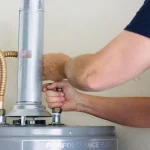


The inspector who comes out after a water heater swap rarely stays more than ten minutes. He isn’t interested in the brand or the price. He looks at the straps, the pipe running outside, the vent on top and the gas line underneath. In that short visit he is checking whether the new tank could start a fire, flood the garage or fall over in the next earthquake.
Most homeowners never see that checklist, but it covers almost everything that separates a sound installation from a risky one. Building departments around Monterey Bay require a permit and a final inspection for replacements, not just for new homes. Skipping the permit can come back later, because California requires sellers to certify in writing that the water heater is properly braced.
Homeowners pricing out Watsonville water heater installation can turn to a family-owned team based just up the road in Royal Oaks. They are Navien certified, include seismic bracing as part of the standard job and back new installs with a 10-year warranty. They do tank, tankless and full replacement work, which matters because the right choice for one garage is often wrong for the next.
Choosing the Heater Before Anyone Picks Up a Wrench
A gas tank heater is still the most common swap, and usually the simplest. Size it by first-hour rating, the amount of hot water it delivers in a busy hour, rather than tank size alone. A household that runs two showers and a dishwasher back to back needs a higher rating than the tank size suggests.
Tankless units are sized by flow rate and temperature rise. Coastal groundwater gets colder in winter, so a unit that feels generous in August can struggle in January. The bigger issue is gas demand. A whole-house tankless model can draw several times the fuel of a standard tank, which often means a larger gas line from the meter. It also needs new venting, since the old flue rarely fits.
Heat pump water heaters suit this climate well. Mild coastal temperatures keep them efficient for most of the year, and a garage gives them the open air they need. They usually require a 240-volt circuit and a condensate drain, and they cool the room around them, which in a garage is usually fine. California’s TECH Clean California program has offered incentives for switching from gas, though amounts and eligibility change, so check before buying.
Ten Minutes and Seven Questions
An inspector reviewing a typical residential installation works through roughly this sequence:
- Is the tank strapped twice, once in the upper third and once in the lower third, with the lower strap clear of the controls?
- Does the temperature and pressure relief valve have a full-size discharge line running to an approved spot, ending low and pointing down?
- Does the vent rise steadily, keep proper clearance from combustibles and end with a cap?
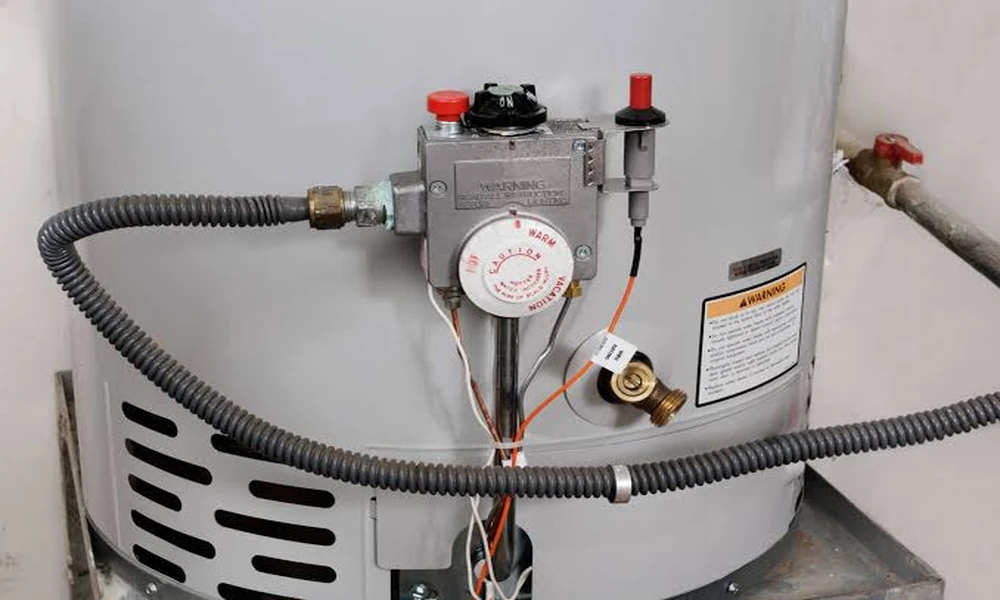
- Does the gas supply include a shutoff valve, a sediment trap and an approved flexible connector?
- If the heater is in a garage, are its burner and ignition high enough off the floor, or does the design meet the flammable vapor exception?
- Is there an expansion tank wherever a check valve or pressure regulator has closed off the plumbing system?
- Are the water lines bonded, and are carbon monoxide alarms in place where fuel-burning appliances are installed?
Most failed inspections come down to the first three items.
Straps that only look right
Strapping is the most common failure, often because the straps exist but were installed poorly. Each strap should wrap all the way around the tank and fasten into a wall stud, not just drywall, with lag screws. A gap between the tank and the wall lets the heater build momentum before the strap catches it, so larger gaps need blocking. The state’s earthquake bracing guidelines for residential water heaters show the accepted methods with drawings. They’re worth a look even for an older tank, because the bracing law covers existing heaters too. A falling tank can tear its gas line loose, and that is how many post-earthquake fires start.
The pipe nobody thinks about
The relief valve opens if the tank overheats or pressure climbs too high. Its discharge line has to carry scalding water somewhere safe without being blocked or reduced in size. A threaded cap on the end, a run that slopes uphill or a line ending at chest height will fail inspection. Those details exist because a valve that can’t discharge freely might as well not be there.
Venting that draws the wrong way
A gas tank’s vent depends on hot exhaust rising. If the pipe sags, has too many elbows or connects poorly to the flue, exhaust can spill back into the room. Inspectors check the slope and joints, and a good installer will also hold a flame or smoke pencil at the draft hood once the burner is running. That test takes thirty seconds and catches the problem that most often causes carbon monoxide trouble.
Where Mineral Content Changes the Plan
Much of the local water supply is hard, and that affects any new heater from the first day. Tank models need yearly flushing and an anode rod check every few years. Tankless heat exchangers need descaling on the schedule in the manual, and some warranties depend on that upkeep. If a water softener is already planned, installing it before or along with the new heater means the heater starts on treated water.
Swap Day From Start to Finish
On a typical replacement, the installer shuts off the gas and water, drains the old tank and removes it. The new unit goes on a stand or into a drain pan if a leak could damage anything nearby. Then the water, gas and vent connections are made. The tank has to be completely full before the burner lights or the electric elements turn on, since heating an empty tank ruins an electric element within seconds. Every joint is checked for leaks, the relief valve is tested, and the thermostat is set to around 120 degrees, which balances comfort, scald protection and slower scale buildup. The final inspection is then scheduled, often within the same week.
Once the Paperwork Is Signed
The signed permit card is worth keeping. It shows a future buyer, appraiser or insurance adjuster that the work was checked by someone outside the company that did it. Registering the warranty with the manufacturer within the required window matters just as much, because many companies shorten coverage when it is skipped. After that, a well-installed heater mostly takes care of itself. A short check of the straps, the relief line and the area around the base once a year is usually enough to catch anything that has moved since the inspector left.