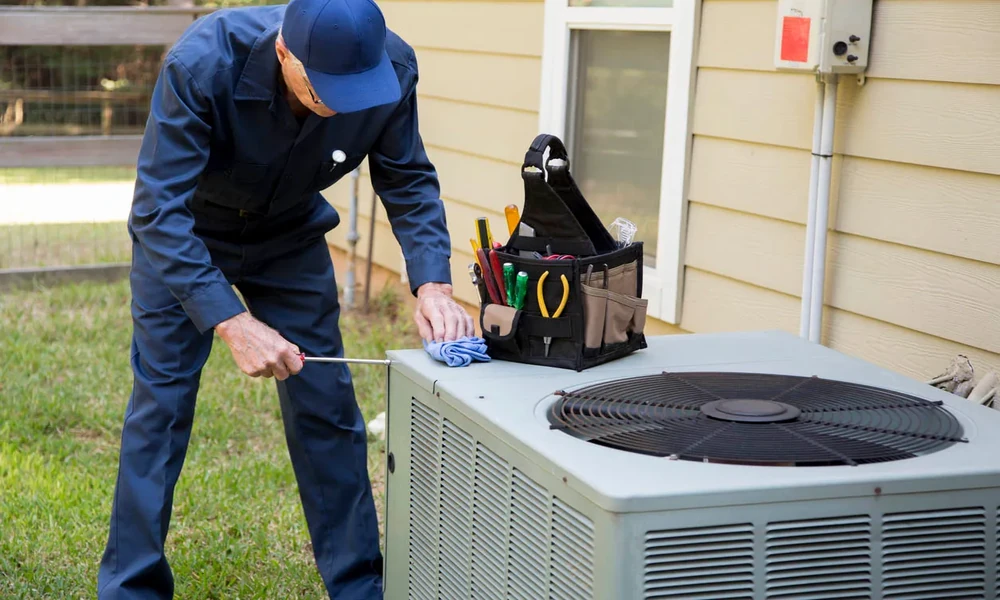


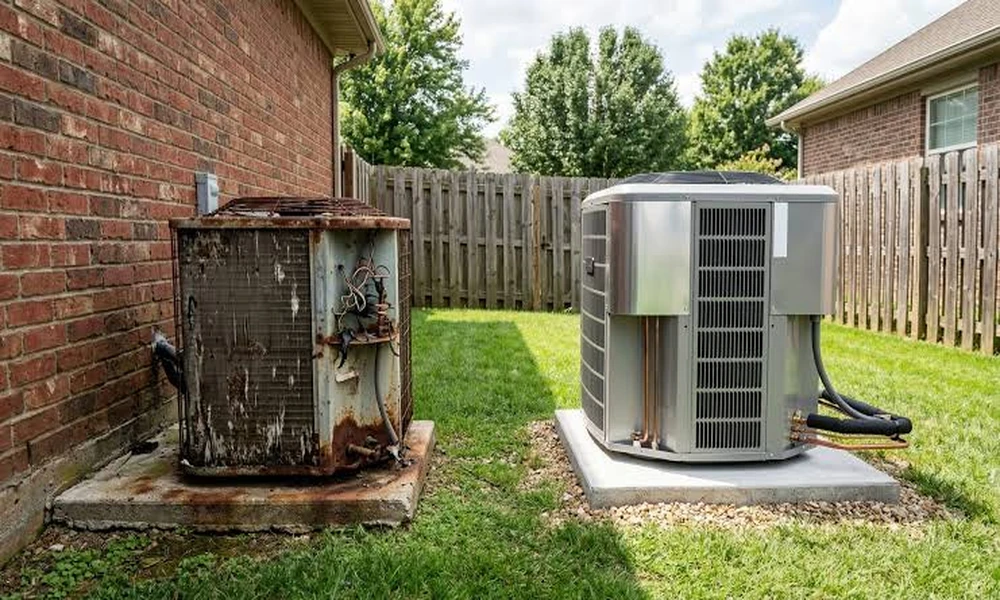
An air conditioner in East Alabama rarely gets a real off season. Cooling often starts in April and runs well into October. On sticky nights the system keeps cycling long after sunset, because its job is not only to lower the temperature but also to pull water out of the air. Then a January cold front drops the Chattahoochee Valley into the twenties, and the same equipment has to work just as hard in the other direction, especially if it is a heat pump. Add up those run hours and a ten-year-old system in Lee County may have done as much work as a much older one somewhere milder.
That wear does not spread evenly across the machine. This is why the repair-first thinking behind American Heating & Cooling fits local homes so well. The Smiths Station company has spent more than 25 years fixing and replacing residential and commercial heating and cooling systems, and its technicians look for the repair that saves the owner money before replacement ever comes up. Most systems that quit have one tired part, not a worn-out machine.
Knowing where trouble tends to start helps a homeowner catch it while it is still a small fix. The pattern runs roughly from the cheapest parts to the most expensive ones.
The Small Parts That Take the First Hit
The capacitor usually goes first. This small cylinder in the outdoor unit stores a burst of energy to start the compressor and fan motor. Summer heat inside that metal cabinet slowly cooks it. A failing capacitor often shows up as a humming outdoor unit whose fan will not spin, or a top that has started to bulge. The part costs little, but running on a weak one strains the motors it is supposed to help.
The contactor has a Southern problem of its own. This switch tells the outdoor unit when to run, and after thousands of cycles its contacts become pitted. In this part of the country it also attracts fire ants, which are drawn to electrical fields. They crawl between the contacts, and as more pile in, the unit can fail to start or refuse to shut off.
The condensate drain fills up faster than most people think. On a humid July day, a central system can pull several gallons of water out of the house. That water runs through a dark, warm drain line, which is ideal for algae and slime. Once the line clogs, the drain pan overflows. If the air handler sits in the attic, the first sign may be a stain on the ceiling below. A cup of vinegar poured into the line’s access port a few times each season goes a long way.
Pine Pollen and Red Clay Are Hard on Coils
Every spring, pine pollen coats the region in yellow, and the outdoor coil collects it along with grass clippings and red clay dust. The thin aluminum fins slowly mat over. A coil that cannot release heat forces the compressor to run hotter and longer, and that heat shortens its life. With the power off, a gentle rinse from a garden hose clears much of it. A pressure washer is a bad idea because it flattens the fins. Keeping shrubs about two feet back from the unit helps too.
The indoor coil wears in a quieter way. A clogged or cheap filter lets dust through, and that dust sticks to the coil’s wet surface. Over time it forms a mat that chokes airflow and can grow mold. Restricted airflow can also cause the coil to freeze in the middle of summer. In peak season, homes with pets often need a new filter every month rather than every three.
Clues the System Gives Before It Fails
Equipment usually announces a problem well before it stops working. The following are worth a call while the repair is still small.
- A clicking sound at the outdoor unit with no startup afterward
- A steady hum while the outdoor fan stays still
- A squeal or grinding from the indoor blower
- A musty smell in the first minutes after cooling kicks on
- A burning odor that lasts long after the first heating cycle of fall
- Ice forming on the larger copper line at the outdoor unit
- Water pooling around the indoor unit or furnace
None of these signs alone means the system is finished. Most point to a single part that has reached the end of its run.
Storms, Surges and the Motors in Between
Summer thunderstorms move through the Chattahoochee Valley almost every afternoon at their peak, and lightning surges and brownouts are rough on HVAC electronics. Control boards and the modules on newer variable-speed motors are particularly sensitive. A surge protector mounted at the outdoor disconnect is an inexpensive way to guard equipment that costs thousands.
Blower and condenser fan motors also wear down through sheer run time. Bearings dry out and windings weaken under constant heat. Replacing a motor costs a small share of what a new system does, and a healthy motor helps every other part last longer.
Ductwork Baking Over Your Head
On a summer afternoon in Lee County, attic temperatures can climb past 130 degrees. Ducts running through that space age faster than anything else in the system. Tape loses its grip, joints separate, and flexible ducts sag or get crushed during attic storage trips. A leaky return duct is the sneakiest problem. It pulls hot, humid attic air straight into the system, which makes a perfectly good air conditioner feel like it is failing. Rooms that never cool down, or a house that stays clammy even while the system runs constantly, often trace back to the ducts rather than the equipment. Sealing joints with mastic fixes many of these problems for far less than new equipment.
When the Expensive Repairs Arrive
Refrigerant leaks are where decisions get harder. Indoor coils can develop pinhole leaks from corrosion, and topping off the refrigerant every summer only covers the problem. Finding and repairing the leak is the real fix. The refrigerant itself matters too. New residential systems have moved away from R-410A toward newer refrigerants such as R-454B and R-32. Older R-410A systems can still be serviced, but that refrigerant keeps getting more expensive. Systems still running on R-22 are usually at the point where replacement becomes the sensible conversation.
The compressor is the heart of the system and the costliest part to replace. A compressor failure on a six-year-old unit still under parts warranty is often worth repairing. The same failure on a fifteen-year-old unit usually is not.
Heating equipment has its own breaking points. Heat pumps sometimes develop reversing valve or defrost board problems during cold snaps. Gas furnaces need a close look at the heat exchanger, because a crack can let carbon monoxide into the home, and that is never a repair to put off. Work on refrigerant circuits, gas connections and HVAC wiring in this state requires a license, and the Alabama Board of Heating, Air Conditioning and Refrigeration Contractors lets homeowners confirm that whoever is doing the work holds one.
Making a Good Repair Count for Years
Repair is the right call when the rest of the system is sound. That means the coils are clean, the ducts are tight, and the compressor still has life in it. It becomes a weaker choice when service calls start coming every season, when the refrigerant is obsolete, or when rooms stay uncomfortable even after the failed part is fixed. Age matters, but no single number settles the question. A well-maintained fourteen-year-old heat pump can outlast a neglected eight-year-old one.
The homes that get the longest life from their equipment tend to share a few simple habits. Their owners change filters on time, keep the outdoor unit clear of pollen and clay, pay attention when a new sound appears, and treat a small part failure as routine upkeep rather than a warning that the whole system is done. In a climate that asks this much of a heating and cooling system every year, catching wear early is what lets the system keep going.