


Pull the small access panel behind a bathtub in an older Central Florida house and the pipe you find there tells a long story. Gray plastic stamped with a faded code, dull steel crusted at the threads, or copper freckled with green spots all mean different things about where that home’s plumbing is headed. Once a house reaches the point where leaks keep returning, the conversation changes from repair to replacement, and replacement is really a chain of smaller choices made in a particular order.
Homeowners researching water line repipes in Sanford often end up talking with the team at floridaplumbernearme.com, a local outfit that opened in 2021 and keeps emergency lines staffed day and night. Its repiping work sits alongside slab leak detection, water heaters, softeners and filtration, which matters because a new supply system touches nearly all of those at once.
What follows are the six decisions that shape a repipe from start to finish, roughly in the order a homeowner will face them.
Reading the Pipe Before Condemning It
The first question is whether the existing system has truly worn out, and the answer depends on what it is made of. Sanford has housing from almost every era, from early twentieth century homes near the historic downtown to subdivisions built in the 1980s and 1990s and newer construction farther out. Each era brought its own pipe.
- Galvanized steel shows up in older homes and rusts from the inside, narrowing the bore until pressure drops and the water turns tan after a few days away.
- Polybutylene is gray, flexible and usually stamped PB2110. It was installed widely from the late 1970s through the mid 1990s, and the InterNACHI overview of polybutylene explains why the material and its fittings tend to fail without warning.
- Copper generally lasts decades, but certain water chemistry produces pinhole leaks that appear one after another.
- CPVC from some later builds turns brittle with age and heat, cracking when someone simply bumps a valve under the sink.
One leak in otherwise sound pipe is a repair. A second or third leak in the same material within a short span is the system telling you its remaining life is short.
Patching One Run or Replacing the Whole Network
Partial repipes exist, and sometimes they make sense. A single failed branch to an addition, or one section of copper damaged by a past slab leak, can be replaced on its own. The trouble is that pipes installed at the same time usually age at the same rate. Replacing half a polybutylene system leaves the other half on the same countdown, and the labor of opening walls twice usually costs more than doing it once.
Whole house replacement also gives the plumber a chance to correct layout problems the original builder left behind, like undersized trunk lines that starve the shower whenever the washer runs.
PEX, Copper or CPVC Under a Florida Roof
Material choice comes next, and Central Florida conditions lean on it heavily. PEX has become the most common pick for residential repiping. It flexes, which means fewer joints and fewer places to leak, and it handles hard water scale better than copper because minerals cling to it less readily. It does need protection from sunlight, so any run near a gable vent or exposed exterior wall should be shielded.
Copper still has loyal fans. It tolerates attic heat well and lasts a long time when the water chemistry suits it, though it costs considerably more and every joint is a soldered connection that took skilled time to make. CPVC sits in the middle on price but carries the same brittleness concerns as the pipe many homeowners are trying to escape.
Florida attics can climb well past 130 degrees in summer, so whichever material goes overhead, the hot lines should be insulated and every pipe secured so it can expand without rubbing against framing.
Going Over the House Instead of Under It
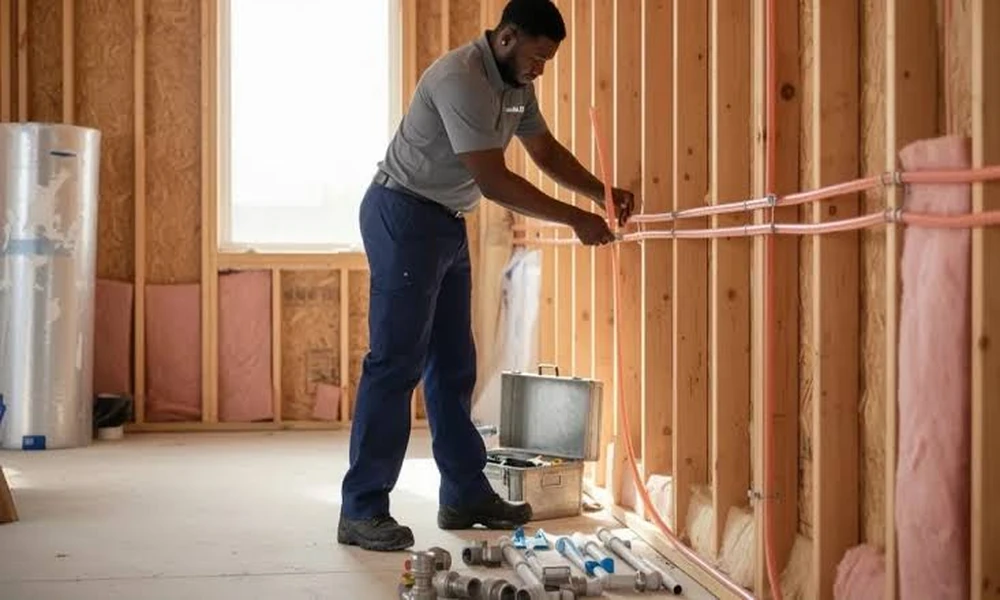
Most Sanford homes sit on concrete slabs, and many original supply lines run beneath them. A repipe almost never puts new lines back under the slab. Instead, plumbers reroute the system overhead, running lines through the attic and dropping them down inside interior walls to each fixture.
This approach has real advantages. Future leaks become visible and reachable rather than hidden under tile. The slab stays intact, which avoids jackhammering and flooring replacement. Old under slab lines are simply capped and abandoned in place.
The trade is a handful of small holes in drywall where lines drop to fixtures, along with careful work in the attic to keep insulation in place and avoid crushing ductwork.
Pieces Worth Swapping While the Water Is Off
A repipe is the cheapest moment to replace several items that otherwise require their own visits. The main shutoff valve is the obvious one, since old gate valves often refuse to close fully when they are needed most. Fixture stop valves under sinks and toilets, hose bibs, and the connections at the water heater all deserve fresh parts.
Then there is the service line, the pipe running from the meter at the street to the house. In many neighborhoods built during the polybutylene years, that buried line is blue or gray PB as well, and leaving it in place keeps one weak link in an otherwise new system. Homeowners already planning a softener or whole house filter can also have the plumber leave a clean loop or bypass ready, which saves cutting new pipe later.
Living in the House While the Pipes Change
Most whole house repipes in a typical single story home take a few working days. Water is usually off during the day and restored each evening, so families can often stay home throughout. Furniture near access points gets moved and covered, and the crew works room by room.
A plumbing permit and inspection are typically part of the process, and the inspection happens before walls are closed so the new work can be seen. Drywall patching follows, sometimes by the plumbing company and sometimes by a separate finisher, with paint touchups left to the homeowner in many cases.
There is also a paperwork benefit that surprises people. Florida insurers frequently ask for a four point inspection on older homes, covering roof, electrical, heating and cooling, and plumbing. Polybutylene or aging galvanized pipe can complicate coverage or raise premiums, while a documented repipe with permit records gives the inspector a clean answer.
Taken together, these six decisions explain why two repipe quotes for similar houses can look so different. One may include the service line, new valves and insulated attic runs, while another covers only the interior branches. Asking how each decision was handled turns a confusing price comparison into a fair one, and it keeps the new system from carrying any of the old one’s weaknesses forward.