

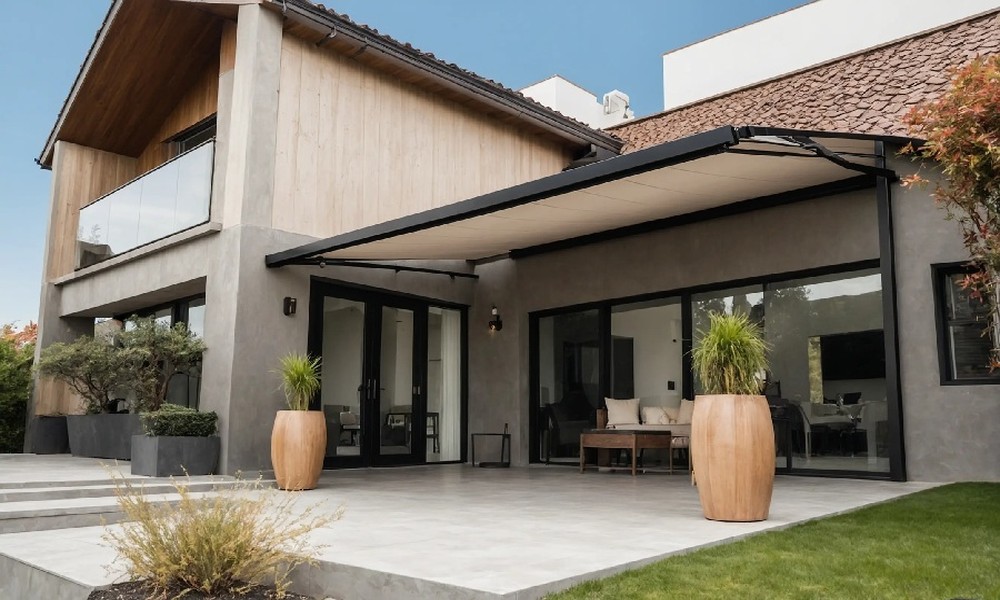
An awning canopy transforms an exposed outdoor area into a usable space that works in Singapore’s climate rather than surrendering to it. The design of the canopy, its materials, the mounting system, and the way it integrates with the existing architecture all determine whether the result is a functional addition that enhances the property or an afterthought that looks mismatched and underperforms within a few years.
What Makes an Awning Canopy Different from a Simple Cover
A canopy is a permanent or semi-permanent covered structure designed as part of the outdoor space rather than as a temporary measure. It is distinguished from a freestanding parasol by its fixed attachment to the building or ground structure, and from a full enclosure by its open sides that allow air movement. The open-sided design is not a compromise in Singapore’s context: it is an advantage. A covered but ventilated space with moving air is significantly more comfortable than an enclosed space with no air movement, even under high solar intensity.
Design choices for an awning canopy start with the covering material, which determines how much light is transmitted, how rain is handled, and what the space looks like from inside and outside. They continue with the frame structure, which determines what loads the canopy can handle, and with the integration into the building facade or landscape, which determines whether the result looks like it belongs or was added as an afterthought.
Material Choices for Canopy Designs
Polycarbonate is the most versatile covering material for awning canopy designs in Singapore. Its light transmission keeps the space below bright rather than oppressively dark. Its impact resistance handles fallen branches and debris from Singapore’s frequent tree-lined streets and garden plantings. UV-stabilised grades block the portion of solar spectrum most responsible for fading and heating, while transmitting visible light. In twin-wall or multiwall configurations, it also provides thermal insulation that reduces heat gain through the panel.
Tempered glass roofing panels create a premium aesthetic for high-end residential and commercial installations. The clarity of glass produces a cleaner visual connection between the covered space and the sky than polycarbonate allows. Glass roofing requires a stronger supporting structure due to its weight, and laminated safety glass is the appropriate specification for any overhead application. Self-cleaning glass coatings reduce the maintenance burden of keeping the surface presentable through Singapore’s frequent dust and rain.
Fabric canopies using marine-grade or awning-grade acrylics provide shade without full rain protection. The fabric is breathable, which allows some air to pass through and reduces the greenhouse effect that solid covers can create. These are appropriate for spaces where occasional rain interruption is acceptable, where the aesthetic requires a softer visual character, or where the installation cannot support the weight of a rigid cover.
Frame Design and Structure
The frame that supports an awning canopy must carry the weight of the cover, any accumulated rain or debris, and the dynamic forces generated by wind. In Singapore, gusts during afternoon thunderstorms can reach significant speeds. A canopy that fails under these conditions creates both safety risks and property damage.
Aluminium is the standard frame material for residential and commercial shade canopy Singapore installations. Extruded aluminium profiles in purpose-designed sections carry loads efficiently while remaining light enough for the attachment points to handle without reinforcement in most residential construction. Stainless steel is used for the fasteners and connection hardware in marine or coastal environments where corrosion resistance is paramount.
“Good design works with the environment it serves. A canopy that fits its setting is one that will still look right in twenty years.” – Lee Kuan Yew, founding Prime Minister of Singapore.
The slope of the canopy roof is a design element with functional consequences. A minimum slope of 5% is needed for rain to run off efficiently. In Singapore, where rain can be heavy and sustained, a slope of 10% to 15% is more reliable for keeping the canopy surface clear and preventing pooling at connections. The direction of the drainage slope should lead water away from the building wall and any occupied areas below.
Integrating Canopy Design with the Building
An awning canopy that looks designed-in rather than added-on contributes to the overall aesthetic of the property. Achieving this requires matching the canopy’s lines, proportions, colour and materials to those of the existing architecture.
For a modern landed home with clean horizontal lines, a flat or low-pitch canopy with a powder-coated aluminium frame in a matching colour and polycarbonate or glass panels creates continuity. For an older shophouse or conservation property, a fabric awning with traditional proportions and a period-appropriate colour palette respects the building’s character without creating visual conflict.
The attachment points between the canopy and the building wall are visible details that affect the quality of the final result. Proper flashing at the wall-to-canopy junction prevents water ingress and creates a clean visual termination. A gap between the canopy and the wall that allows driving rain to enter, or a flashing detail that looks improvised, signals a quality shortfall that is visible from outside the property.
Working with a Specialist
A canopy design that balances structural performance, compliance with HDB or condominium requirements, aesthetic integration and long-term durability requires a contractor who understands all of these elements. Request to see completed projects similar to yours in scale and setting before committing to a design.
An awning canopy design Singapore property owners invest in properly planned and installed adds usable outdoor space, improves the property’s appearance, and performs reliably through Singapore’s demanding climate for a decade or more.